Zachary Seddon
Junior Researcher Based in the Philadelphia Area, with experience in Psychology, Legal Study, and Research & Development.Click any of the buttons below to view some of my work.
The BasisHelping young people build emotional intelligence is essential for fostering resilience and mental well-being. I collaborated with the Duquesne University Psychology Clinic to develop a curriculum for ACH Clear Pathways, a local 501(c)(3) nonprofit pilot program. Targeted at children aged 10–17, the program focused on teaching emotional intelligence and coping skills as part of an early intervention initiative.As part of this effort, I conducted user research to understand the participants' emotional needs and collaborated with psychologists to design a user-friendly assessment tool. This process involved gathering insights through interviews and observations, translating findings into actionable design decisions, and validating the tool's effectiveness through iterative testing with real users.
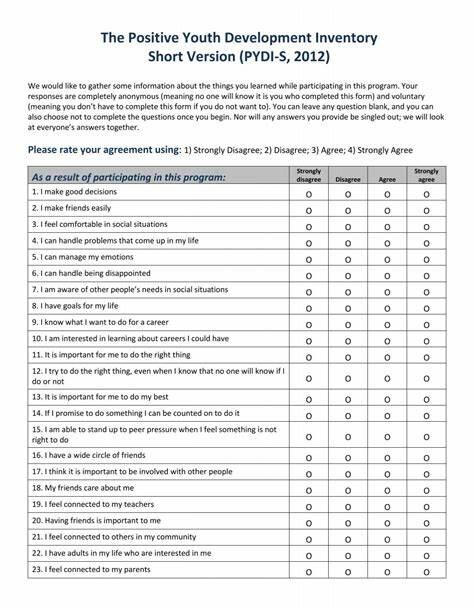
The Initial Test RunAn initial caveat of this project was that the Psychology Clinic wanted Positive Youth Development (PYD) principles, typically employed by organizations such as 4H, to be the basis of the tool.With that in mind, the inventory assessment pictured on the left, consisting of 35 statements, was used as a prototype tool. If successful, it would be used for intake assessments and exit assessments to gauge the effectiveness of the program overall.There were about 7 questions for each of the "5 C's" as listed in Positive Youth Development principles, those being: connection, caring, competence, character, and confidence.Initital Test Results
This tool was partially successful, however, it was not recommended for further use. In response, the following general comments and concerns were raised. - "This is too much like school." - "It's too long." - Heightened visible frustration among participants - Concerns were raised regarding scoring, and being "too exam-like" overall.
Test #2We had shortened the intake/exit assessment from 35 questions to 20, and it now appeared as such:
- Questions per section (Corresponding to Each of the 5 C's): 7 → 4
- Each question had a scoring value of 1 → 4
- A higher score was considered better, and vice versa
- Highest Possible Score: 16 per section; 80 total.
- Lowest Possible Score: 4 per section; 16 totalTest #2 Results - The shortened tool saw more success than its full-length predecessor. There was a reported decrease in dissatisfaction.
- The number of dissatisfied students, according to volunteers, had decreased by at least 50%.
- Students felt as if it was "less test-like" and some noted that it felt "less stressful" when told that the maximum score was an 80, and it was impossible to get a score of 0.
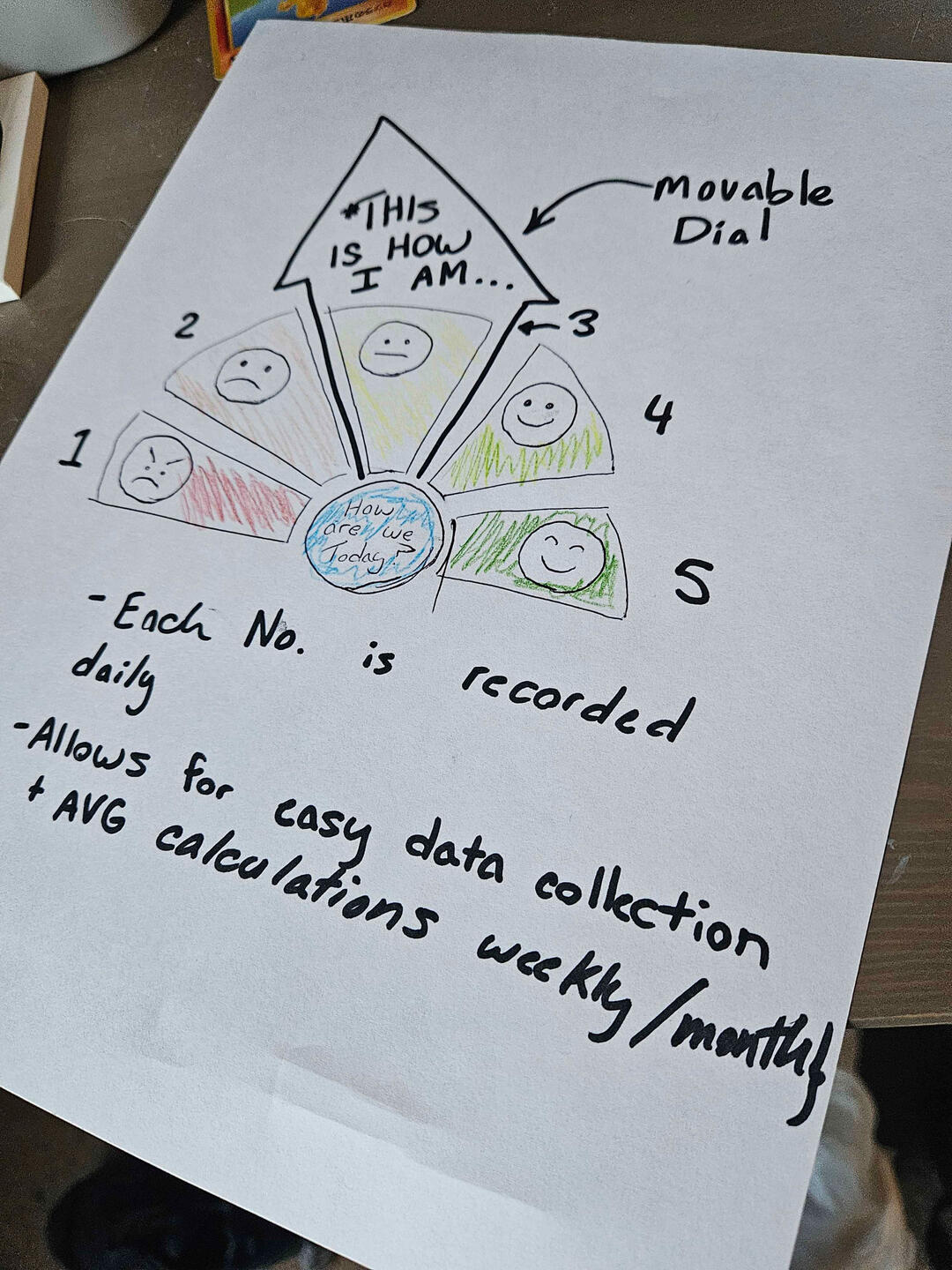
An Extra Request - While there was more success with the second intake/exit assessment for the program, the Psychology Department at Duquesne University asked me to help design a tool to assist the program in tracking the day-to-day feelings of participant students in the pilot program. - The "tool" pictured to the left was conceptualized to give more day-to-day readings, as students would be able to move the dial on the tool, which could be made of laminated paper to promote stability, to show the teachers how they feel. Each feeling would be given a numerical value, which could be used to generate an average weekly/monthly, to see how students are thriving during their time in the program. - This also could show the day-to-day effectiveness of certain lessons in the curriculum, projected outcomes per student, and over program effectiveness prior to the exit assessment.Conclusion - Overall, this project spanned a total of four months, influenced by external commitments such as other academic and professional responsibilities. Despite these challenges, the development and implementation of the intake/exit assessment and emotional gauging tool proved to be an invaluable contribution. These tools were adopted by the program staff and continued to be utilized by the non-profit for the remainder of the pilot program, showcasing their practical applicability and potential long-term impact.Embarking on this project was a significant learning experience for me, as it required stepping into unfamiliar territory. Prior to this, I had never been tasked with creating tools or designing a curriculum for a program of this scope and nature. The process was both challenging and rewarding, pushing me to grow in ways I hadn't anticipated. Fortunately, I had the support of my mentor and supervisor, Dr. Jessie Goicochea, the clinic director at Duquesne, who played a pivotal role in guiding me through this journey. Her expertise and encouragement provided me with the confidence to explore new ideas and refine the tools and curriculum to better serve the program's needs.Reflecting on this experience, I am deeply grateful for the opportunity to contribute to such meaningful work. Not only did it allow me to apply my skills in a real-world setting, but it also taught me the importance of collaboration, adaptability, and creative problem-solving. I am confident that the insights and skills I gained during this project will continue to inform my future endeavors.
Basis and Introuction This study, done for a capstone project, aimed to study the correlation between gender and how harsh people would sentence a guilty convict, if given the chance. This project is heavily rooted in the field of Experimental Jurisprudence. Experimental jurisprudence (X-Jur), as defined, is an emergent field of legal scholarship that explores the nature of legal phenomena through psychological investigations of legal concepts. The field aims to elucidate common intuitions in a systematic fashion employing the methods of social science.Some quick facts about the study:
- This Study was done through a survey on Qualtrics, and recruitment was done over social media.
- 2x2 study: Our Variables were the Participant Gender (male/female) and Defendant Gender (male/female).
- All participants received the same legal case, where only the gender of the defendant was swapped. Distribution was randomized.
- The case participants were asked to read was an assault case on a minor, where the defendant was 44 years of age. This was intentional as to be a polarizing case where the participant would have no doubt the Defendant was not a good person.We hypothesized that gender would impact the
severity of sentences. Female defendants would receive comparatively more lenient sentences, while male defendants would face harsher ones, with female participants more likely to give harsher punishments.Demographic Data:
- Total recorded number of participants: 146 total participants
- Average Age of Participants: 33.5 years old
- Participant Gender Identification Breakdown: 73 Male , 72 Female, 1 Gender Non-Conforming (Excluded)
Average Salary: $88,000 USD
The Task and Results:
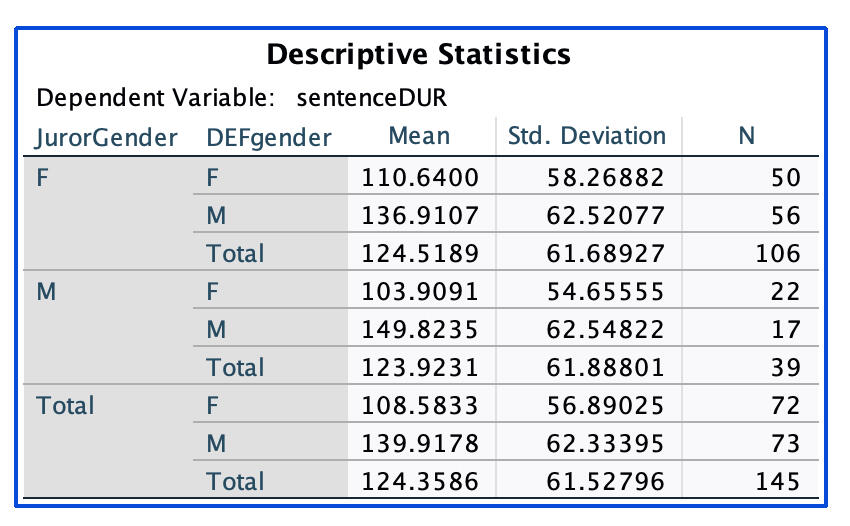
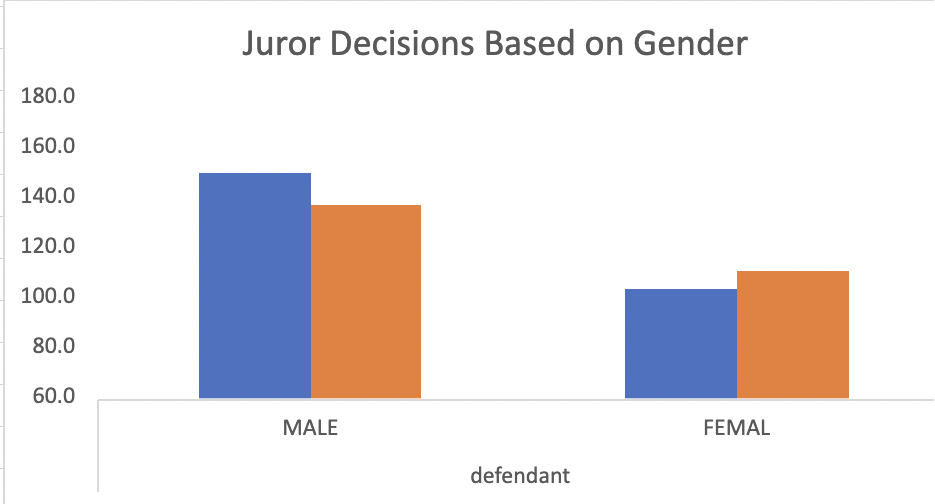
Task: Participants randomly received case versions featuring either a male or female defendant and were asked to determine a prison sentence ranging from 64 years to life without parole. Participants were also given a "recommended" sentence from the proseuction of 70 years.Results: The findings reveal compelling patterns in juror decision-making. As predicted, male defendants received longer sentences. However, while numeric trends showed that male and female participants tended to be more severe when sentencing a defendant of their own gender, the main effect of juror gender was not significant. Analysis of the data was done through a two-way ANOVA to generate a graph in excel to better illustrate the data. ConclusionIn conclusion, this study highlights gender-based biases in sentencing decisions, aligning with Experimental Jurisprudence findings. Male defendants received harsher sentences, confirming the hypothesis, while participant gender showed no significant impact, despite observable trends. These results emphasize the need for further research on how psychological and societal factors influence legal judgments. Expanding future studies to include diverse cases and participants could enhance understanding and promote fairer, more impartial justice.
Study Overview
This study was done for a Research Methods course, where the focus of the study was to study if those who experienced symptoms of Generalized Anxiety Disorder (GAD) had done anything to deal with their symptoms. The study was executed through a Qualtrics survey. Hypothesis: Individuals who experience symptoms of Generalized Anxiety Disorder (GAD) are more likely to take action to manage their symptoms if they are female rather than male.
Total Number of Responses: 63
Gender Breakdown; 45 female ; 18 male
Average Age: 20.25 years old
Data and Results
In total 25 (39.7% of total) responses indicated they experienced symptoms of Genralized Anxiety Disorder (GAD). Out of those 25, 22 were female, and 3 were male.
Of those 3 male responses, only 1 (33%) had reported they had taken action to manage symptoms.
Out of the 22 female responses, about 16 (72.7%) reported they took action to manage their symptoms.
What Can We Conclude?
Males reported to be less likely to have experienced symptoms of GAD, and even less who had reported took action to manage symptoms. Female participants were more likely to take action to deal with their symptoms if they reported them. This coincides with societal perceptions of mental health in young adults.
Abstract
This project explores the ethical considerations associated with the use of amygdala activity in a legal setting concerning memory repression. Memory repression, a concept fraught with controversy, has raised complex questions about the reliability of repressed memories as legal evidence. Recent research has examined the role of the amygdala, a key brain region in emotional processing, prefrontal cortex, anterior cingulate cortex, and right inferior frontal gyrus in potentially indicating the presence of repressed memories. This paper critically examines the ethical implications surrounding the utilization of neural activity as a diagnostic tool in legal cases involving memory repression. It delves into the challenges of informed consent, potential emotional distress to participants, privacy and confidentiality concerns, and the risk of false memory implantation. The paper also underscores the importance of transparency, responsible reporting, and the need for rigorous ethical guidelines when employing neuroimaging techniques in legal contexts. It concludes by offering recommendations for ensuring ethical standards are upheld when neural activity data is presented as evidence in the courtroom.
Research Question: What is the admissibility of the fMRI in court? How does it hold up as evidence?Methods / Procedure
In this study, proper research in legal databases and neuroscience databases was necessary. For this project, roughly 1,987 cases with the keywords "fmri" or "polygraph" were vetted for this project. Only 3 were considered valid for this project.
From this, we were able to make inferences on the admissibility and the nature of the fMRI in court. From those three cases, the fMRI was used as evidence for repressed memories, but was later excluded as admissible evidence. The inital cases was from 1999, and the latest from 2020. While legally it seems like a dead end, scientifically, there are many areas of the brain that activate when we are being dishonest. These areas are:
Amygdala
• Fight or flight response and fear conditioning.
• Processes emotional stimuli & is critical to forming and consolidating emotional
memories
Prefrontal Cortex
• Medial PFC (mPFC): memory, emotional processing & cognitive flexibility.
• Lateral PFC (lPFC): performance monitoring, sensory processing, & motor control.
• Activation for deception related to experienced & unexperienced events
Anterior Cingulate Cortex
• Crucial to the executive functioning & emotional components of deception
• Activation of the ACC correlates to specific types of lies: experienced and
spontaneous lies
Right Inferior Frontal Gyrus
• Inhibition control and is important for monitoring body language, speech, and
posture during deception
• Increased activation during may affect language processing and verbal fluencyConclusion
The admissibility of functional Magnetic Resonance Imaging (fMRI) in court is still very much up for debate, accounting for the Frye and Daubert standards which require general acceptance within the scientific community. While fMRI is a sophisticated technique for depicting brain function, its use as evidence in court, particularly for lie detection, has not yet consistently met these evidentiary standards. Courts are cautious with fMRI evidence because it involves interpreting complex brain activity patterns, which may not conclusively indicate a person’s mental state or truthfulness. However, if expert testimony regarding fMRI images is deemed admissible, it has been proven to offer significant insight into the parties’ mental states and capabilities, provided the triers of fact are properly educated to interpret the images.
References:
Bissière, S., Plachta, N., Hoyer, D., McAllister, K. H., Olpe, H.-R., Grace, A. A., & Cryan, J. F. (2008). The Rostral
Anterior Cingulate Cortex Modulates the Efficiency of Amygdala-Dependent Fear Learning. Biological
Psychiatry, 63(9), 821–831. https://doi.org/10.1016/j.biopsych.2007.10.022
• Keller v. Maccubbin, 60 A.3d 427 (Del. 2013)
.
• Langleben, D. D., Schroeder, L., Maldjian, J. A., Gur, R. C., McDonald, S., Ragland, J. D., O’Brien, C. P., &
Childress, A. R. (2002). Brain Activity during Simulated Deception: An Event-Related Functional Magnetic
Resonance Study. NeuroImage, 15(3), 727–732. https://doi.org/10.1006/nimg.2001.1003
• Luan Phan, K., Magalhaes, A., Ziemlewicz, T. J., Fitzgerald, D. A., Green, C., & Smith, W. (2005). Neural
correlates of telling lies. Academic Radiology, 12(2), 164–172. https://doi.org/10.1016/j.acra.2004.11.023
• Moriarty v. Garden Sanctuary Church, 334 S.C. 150, 511 S.E.2d 699 (S.C. Ct. App. 1999)
.
• Ofen, N., Whitfield-Gabrieli, S., Chai, X. J., Schwarzlose, R. F., & Gabrieli, J. D. E. (2017). Neural correlates of
deception: lying about past events and personal beliefs. Social Cognitive and Affective Neuroscience, 12(1),
116–127. https://doi.org/10.1093/scan/nsw15